
Industry 4.0 Division
Production digitalization that delivers tangible results.
We implement control, data integration, and traceability systems that solve real operational challenges in manufacturing.
Shop Floor Challenges
Bottlenecks we eliminate.
We design and deploy systems where paper reports fail, incomplete data causes delays, or lack of machine communication generates real operational losses.
Unplanned downtime
through accurate PLC signal logging and root-cause analysis.
Traceability
of components and process parameters across the entire supply chain.
OEE increase
achieved within the first 6 months of monitoring implementation.
Inaccurate or omitted downtime causes in paper reports
Problem
Downtime logs repeatedly cite “general breakdown” or “out of material” because operators lack time to describe issues precisely, or reports are filled out at shift end.
Solution
Integration with PLC logic — the system automatically logs machine stops, while the operator confirms predefined root causes.
Results
Objective, hard data for Maintenance, Quality, and Logistics for actionable Pareto (80/20) analysis.
Costly customer claims with no way to isolate the defective batch
Problem
A customer reports defective parts, and the plant — lacking precise tracking data — must recall or retest an entire production batch at its own expense.
Solution
End-to-end component traceability — linking serial numbers with raw material batches, process parameters, operators, machines, and test stations.
Results
Instant isolation of risk to a specific sub-batch, or verification of full process compliance to identify issues in the right place.
Errors in recipe selection and process parameters (bad batch)
Problem
Operators manually configure temperatures, pressures, or ingredient ratios — a single typo leads to the complete loss of the entire batch.
Solution
Centralized recipe/batch management. Parameters are retrieved directly from the ERP order and automatically downloaded to PLCs upon scanning the work order.
Results
Elimination of human error and standardized quality regardless of operator experience.
Lack of visibility into actual unit production costs (Utilities & Energy)
Problem
Energy and utility costs are allocated equally across plant floor area rather than accurately tied to specific products or production lines.
Solution
Sub-meter utility and energy monitoring correlated in real time with active production orders in MES.
Results
Precise energy cost calculation per unit produced, along with identification of idling machines generating unnecessary losses.
IT/OT Architecture
Comprehensive support for factory digital transformation.
We bridge control, supervisory, planning, and management layers into a secure, scalable data ecosystem. We tailor solutions to real processes, existing infrastructure, and business objectives.
Management
We consult on technical and strategic solutions, design digital transformation roadmaps, and integrate manufacturing with ERP systems.
Planning
We design and deploy MES, Traceability, and production planning & scheduling solutions, driven by consistent process data.
Supervisory
We build robust infrastructure at the IT/OT boundary: integrating SCADA and DCS, virtualizing servers, and implementing tailored control architectures.
Control & AI
We capture data at the source, integrate PLCs and field devices, implement M2M communications, Edge computing, Unified Namespace, and advanced AI vision systems.
Implementation Methodology
From initial analysis to long-term system maintenance.
We deploy in structured phases with milestone sign-offs and rigorous data validation. This approach minimizes risk, ensures production continuity, and leaves room for future scaling.
Analysis
Assessment of the existing factory environment and identification of key functional and business requirements.
Design
Scalable, secure network architecture and data exchange blueprint connecting PLC, SCADA, and ERP.
Implementation
Data aggregation, software development, system integration, and phased milestone sign-offs ensuring project agility.
Testing
Integration tests, data integrity checks, production run trials, and comprehensive solution validation.
Support
Hands-on training, technical documentation, routine maintenance, and ongoing updates for operators and management.
Project Experience
Featured Projects
We deliver projects where dependable industrial automation drives measurable improvements in throughput, quality, and information flow.
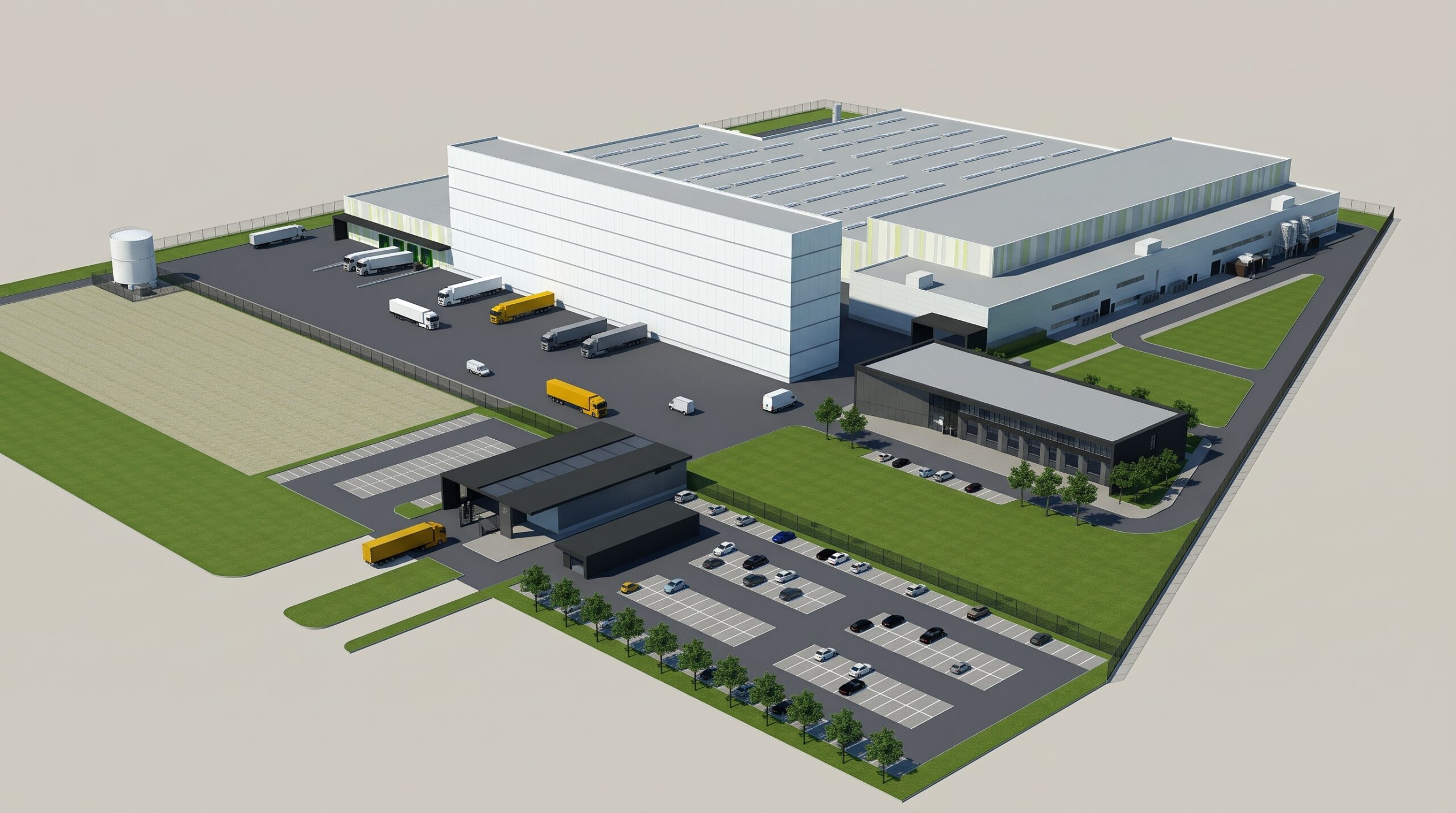
SCADA and Batch Production Control System
Design and deployment of a batch control system in a virtualized environment for a chemical manufacturer across two sites. SCADA connecting 25+ PLCs, flexible recipe management, automated chemical dosing, and MES reporting.
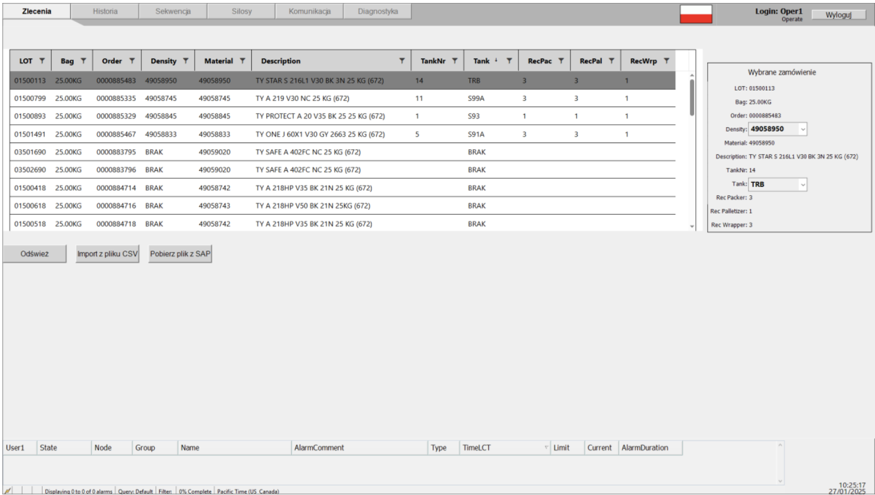
Packaging Management System with ERP Integration
Concept and engineering of a packaging management system for mobile packaging machines. Automated work order prioritization, tank allocation, and dynamic label printing driven by ERP data.
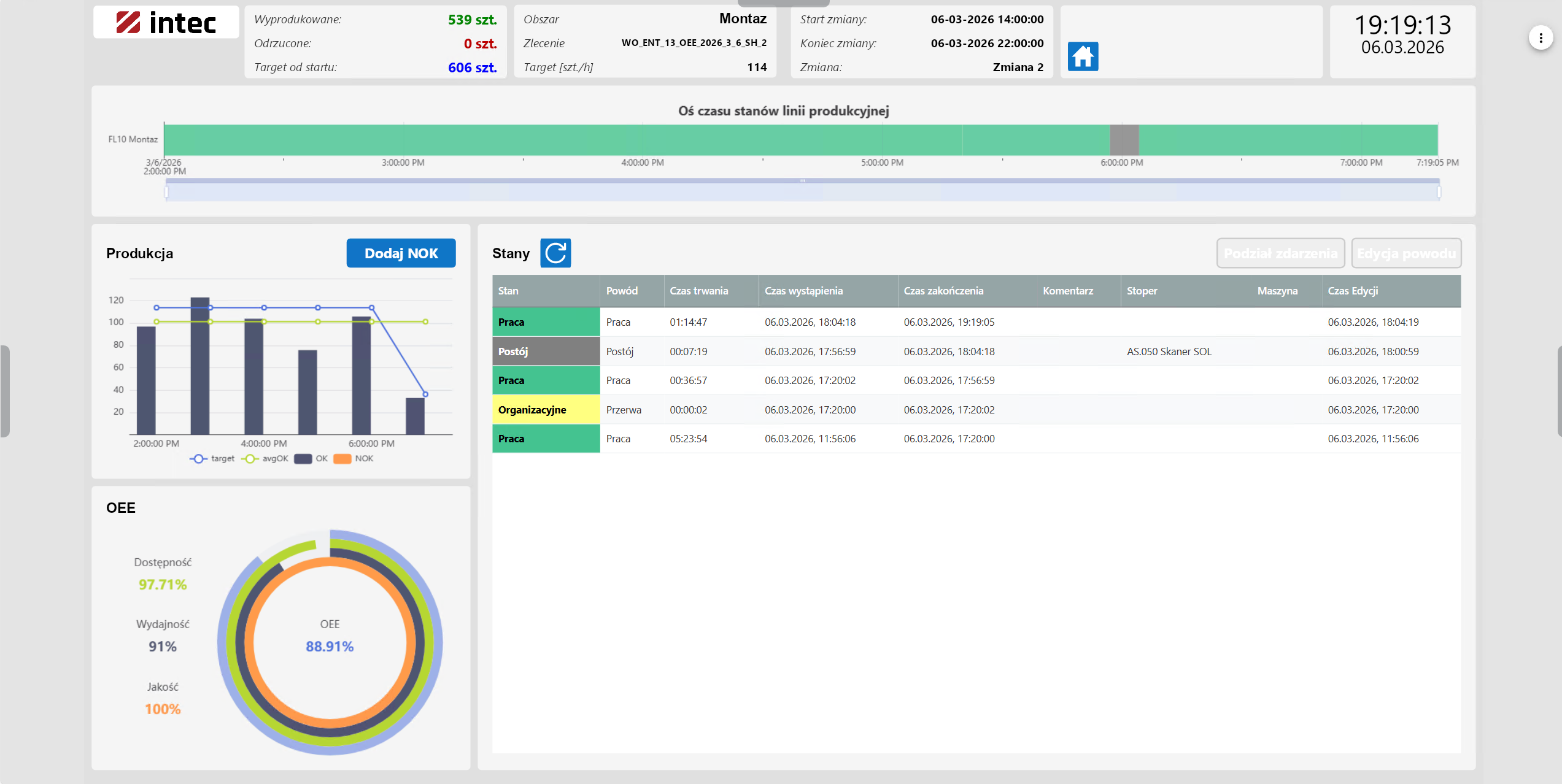
MES OEE Pilot for Assembly Lines
MES solution for a major home appliance manufacturer — real-time OEE tracking across production lines, integration of 200+ assembly stations, automated test quality logging, and reporting in AVEVA InTouch OMI.
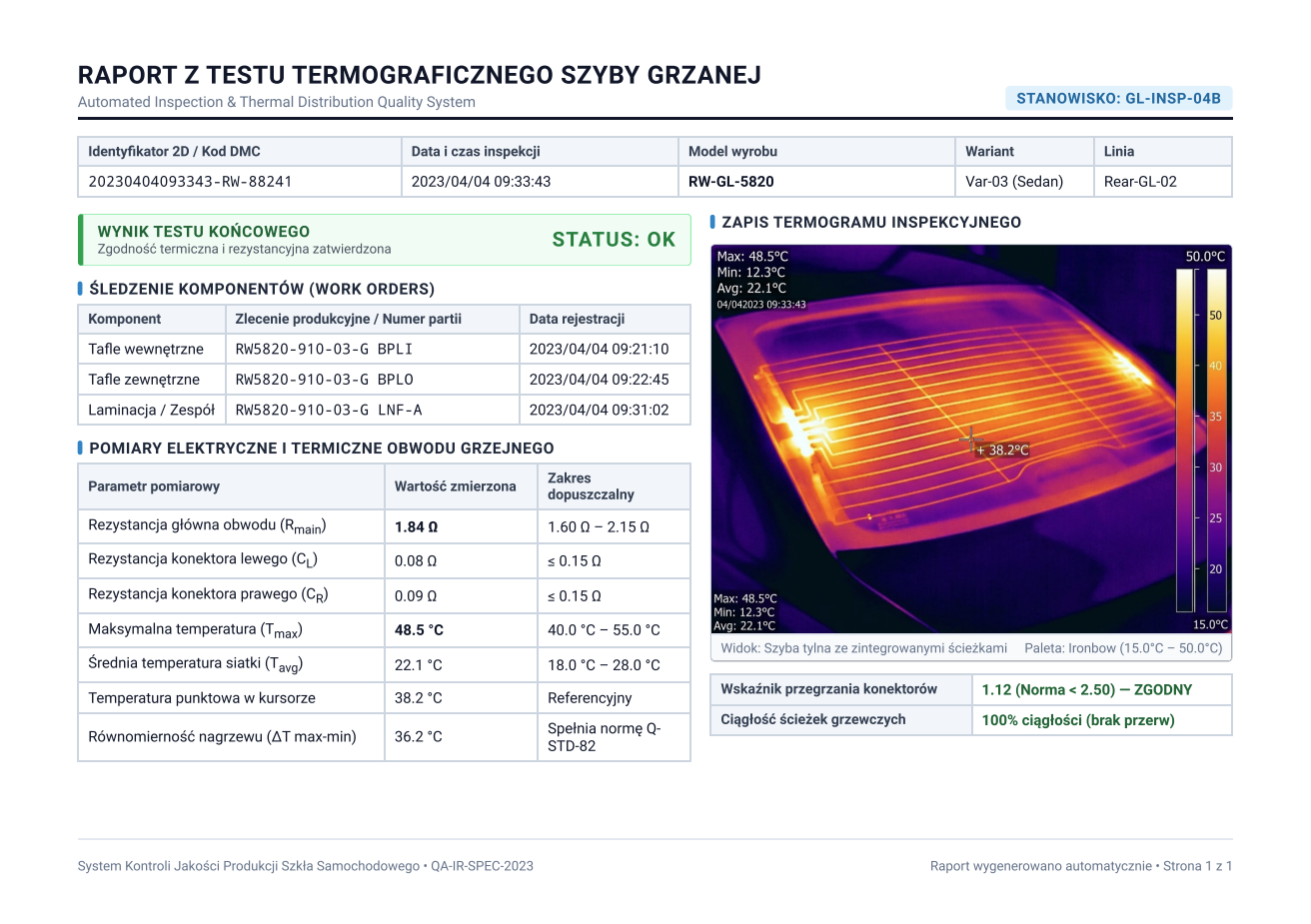
Thermal Imaging Defect Detection for Automotive Glass
Automated thermal imaging inspection station for an automotive glass manufacturing line. Heating grid defect detection, automatic NOK logging with thermographic snapshots, and autonomous changeovers based on active product models.
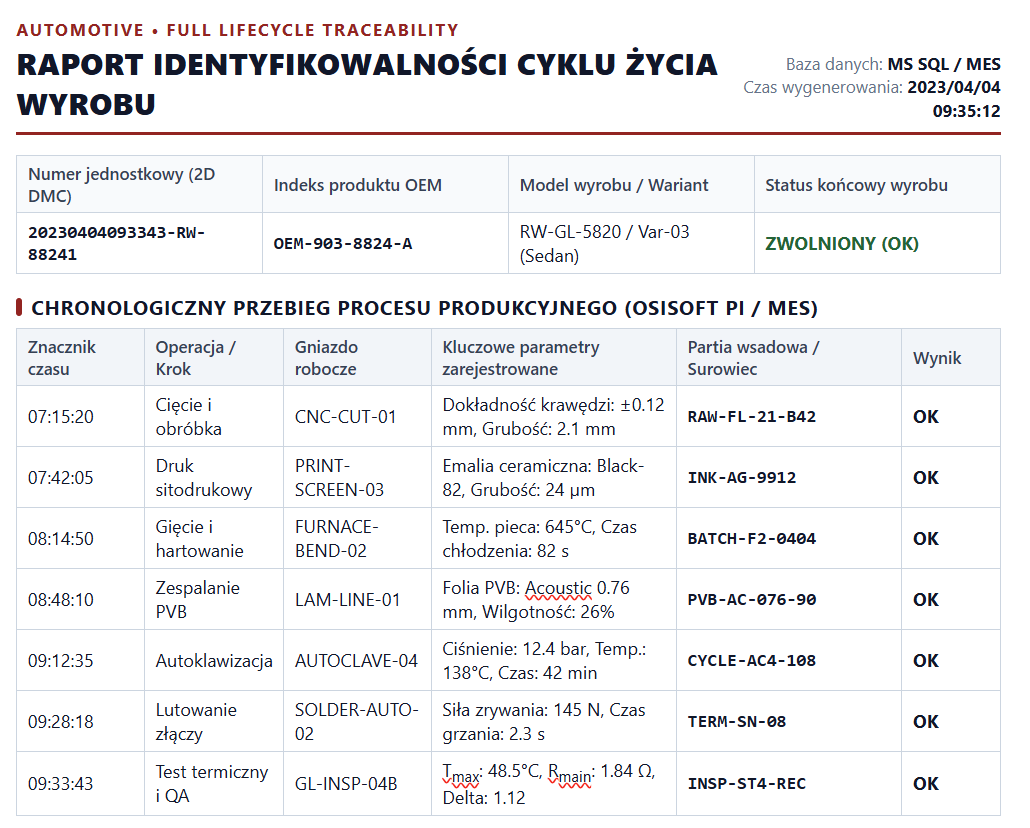
End-to-End Product Lifecycle Traceability System
Traceability platform aggregating multi-source production data for an automotive glass manufacturer. Instant product genealogy report generated upon barcode scan — comprehensive process parameters, and visual inspection logs archived throughout the warranty lifecycle.
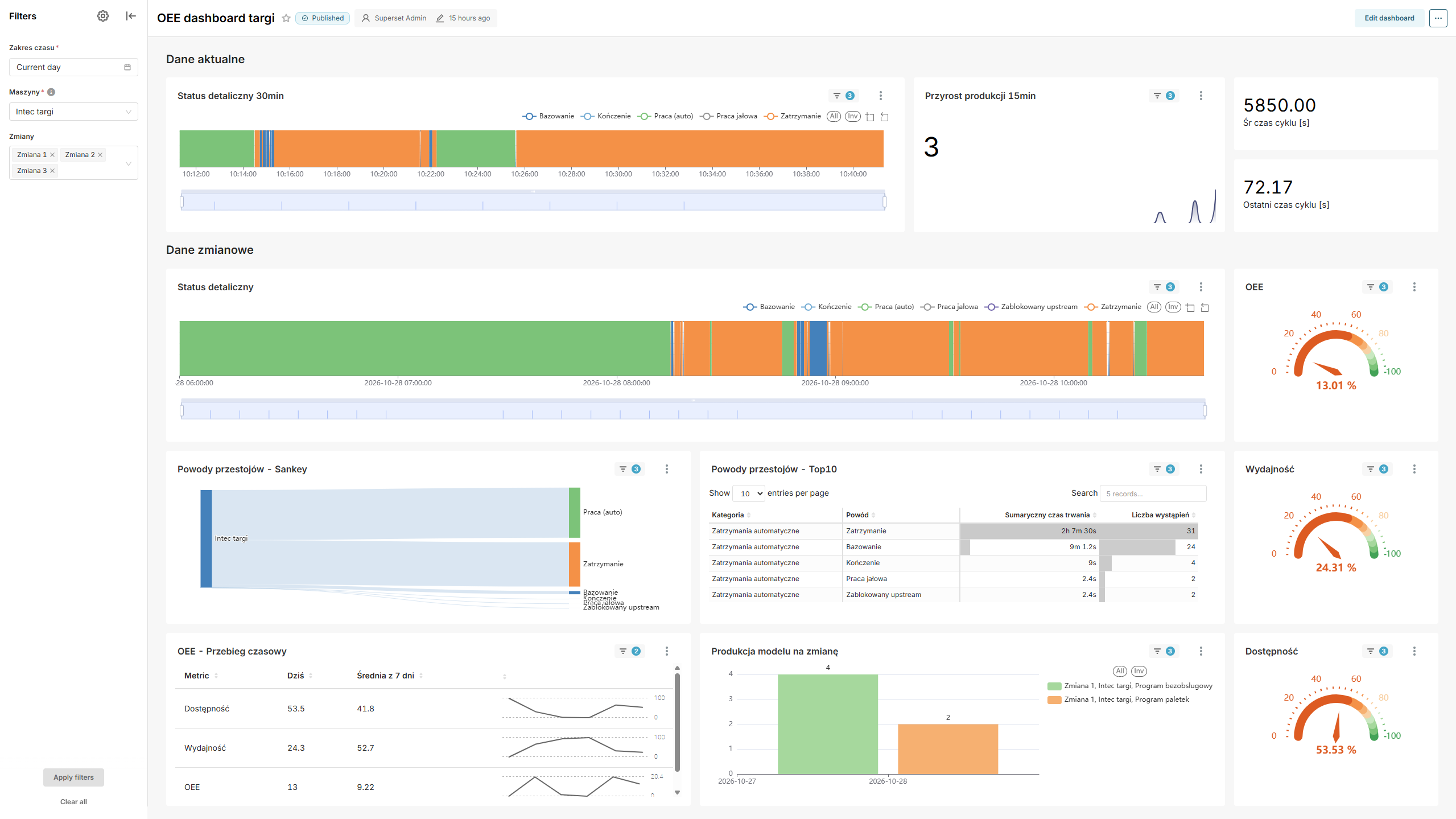
Proprietary MES OEE & Production Performance System
Proprietary MES OEE platform designed for rapid deployment across diverse manufacturing verticals. Real-time machine and line tracking, intuitive operator downtime categorization, and deep analytics for OEE metrics and energy consumption.
Phased Approach
Proof of Concept (PoC).
Evaluate selected capabilities and integration architecture on a pilot machine or line segment before committing to plant-wide rollout.
Scope & Objectives
- Selecting a representative process area or machine for the pilot trial.
- Defining critical signals and operational parameters to be analyzed.
- Establishing technical validation and success criteria upfront.
Non-Invasive Integration
- Selecting a non-intrusive method for reading automation data.
- Configuring secure communications aligned with industrial network standards.
- Setting up the pilot environment for preliminary signal logging.
Live Production Testing
- Pilot data acquisition during standard operating production cycles.
- Verifying signal stability and completeness of captured events.
- Initial assessment of UI usability and actionable insight value.
Findings & Roadmap
- Summary of key observations, performance findings, and ROI metrics.
- Highlighting technical or operational constraints identified.
- Strategic recommendations and conditions for full-scale rollout.